Restoring a 1950s Terrazzo Floor in Tampa Bay: Why It Needs a Different Approach Than a New Floor
Walk into an older Tampa Bay home and there's a good chance the terrazzo floor has been there longer than some of the people living in the house. Furniture has been moved across it for decades. Kids have run through the rooms. Walls have been repainted, kitchens remodeled, bathrooms updated more than once — and through all of it, the terrazzo has often stayed exactly where it was poured.
Terrazzo was the standard finish floor in Florida homes built roughly between the mid-1950s and early 1970s, which is precisely the era that produced much of Tampa Bay's mid-century housing stock in neighborhoods like South Tampa, Seminole Heights, Temple Terrace, and the older subdivisions around Brandon and St. Petersburg. That means a large share of the terrazzo restoration calls in this region involve floors that are 50 to 70+ years old — not a handful of exceptions.
So when a floor from 1955 or 1962 starts looking dull, cracked, or stained, treating it like a brand-new terrazzo installation doesn't hold up. It has a history, and that history changes how it should be restored.
Look at What Is Already There
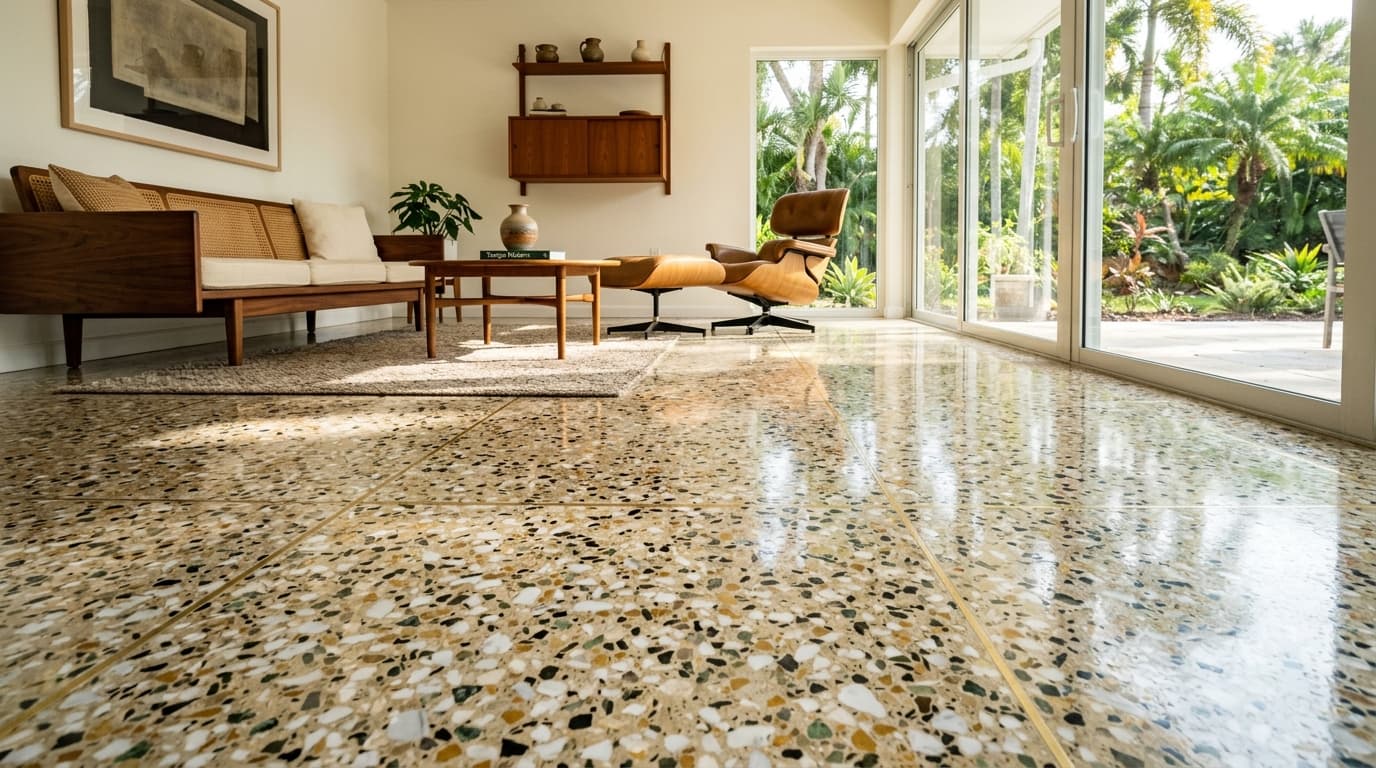
Terrazzo is durable — that's a big reason so many original floors have survived 60-plus Florida summers. But two terrazzo floors can look completely different from each other. The aggregate in one Tampa Bay home may bear no resemblance to the aggregate in the house next door: different stone, different glass, different color mix, different chip size, different pattern.
That matters the moment a section needs repair. A technically sound patch can still look wrong if the new aggregate doesn't blend with what's already there — and on an older floor, a mismatched patch is easy to spot. This isn't something a sample chip from a catalog can solve. The existing floor has to be assessed in person before any repair material gets mixed.
Decades of Wear Tell a Story
An older terrazzo floor has usually been through more than one era of the house. A hallway may show far more wear than a back bedroom that's barely been touched since installation. There may be stains, hairline cracks, dull patches, old DIY repairs, or marks left by furniture, appliances, and past renovations.
Then there's what's been put on the floor over the years: wax, topical coatings, cleaning products, and prior restoration attempts all change how the terrazzo looks and behaves today. Sometimes what looks like a problem with the terrazzo itself is actually a problem with something sitting on top of it — old wax buildup, a failed sealer, or an incompatible coating. That distinction changes the entire approach. Grinding immediately isn't automatically the right first move, and neither is covering the floor with another product just because the last company tried that. The surface has to be understood before it's treated.
Repair, Restore, or Recoat? A Quick Decision Guide
Not every dull or damaged terrazzo floor needs the same level of work. Here's how a specialist typically triages an older Tampa Bay floor during an on-site assessment:
| Floor Condition | Likely Cause | Typical Approach | Rough Timeline |
|---|---|---|---|
| Dull, cloudy, but no cracks or pits | Worn wax/sealer layer, surface grime | Strip old coating, diamond polish, reseal | 1 day (single room) to a few days (whole house) |
| Scratches and light traffic-pattern wear | Grit tracked in over years, missing sealer | Honing + repolish + fresh sealer | 1–2 days |
| Hairline or long cracks | Slab settling, age, moisture movement | Color- and aggregate-matched crack repair, then repolish | 1–3 days depending on crack length |
| Chips, holes, or missing sections (often from removed carpet tack strips or tile) | Prior renovations, carpet/tile removal | Custom aggregate patching to match original chip pattern, then grind and polish | 2–4 days |
| Floor feels rough or has visible seams/patches from a prior "quick fix" | Incompatible past repair material | Full assessment, possible removal and correct re-patch, full restoration | Varies — always assessed on-site |
| Original terrazzo suspected under carpet, vinyl, or tile | 1950s–1970s build era | Non-destructive assessment, then reveal and restore if terrazzo is present | Assessment is typically same-visit |
This is a general guide, not a diagnosis — the only way to know what a specific floor actually needs is a free on-site assessment, since two floors with the same symptoms can have different root causes.
Why Tampa Bay's Terrazzo Is a Different Job Than a New Installation
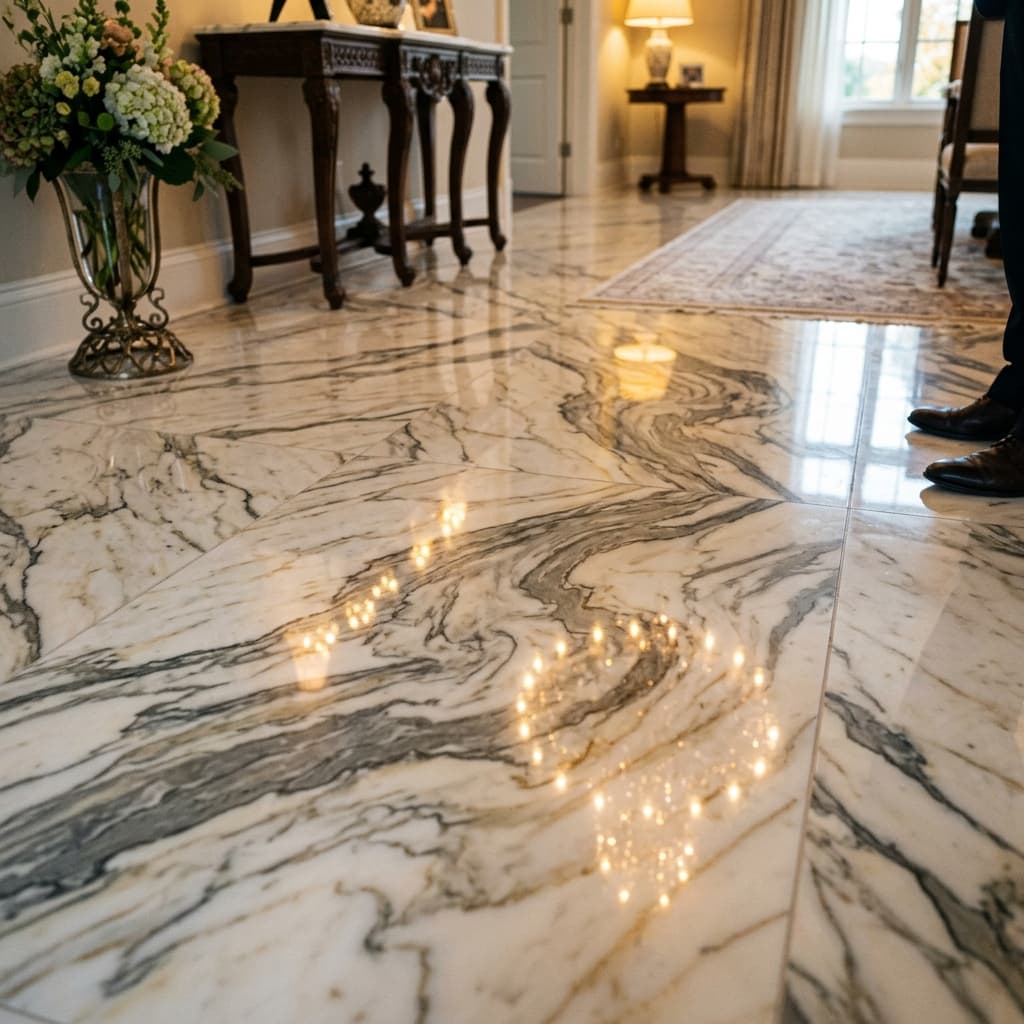
Tampa Bay's mid-century housing boom left the region with one of the largest concentrations of original poured terrazzo in the country, and that same construction era means many of these same homes also have original marble or travertine in bathrooms and entryways. A restoration specialist working in Tampa Bay is regularly dealing with decades of Florida-specific conditions on top of the terrazzo itself:
- Humidity and slab moisture — Florida's climate affects how sealers cure and how long they last, which is why moisture testing before sealing matters more here than in drier climates.
- Sun exposure near entryways and Florida rooms — UV exposure through glass doors can affect certain coatings over time.
- Decades of product layering — many Tampa Bay terrazzo floors have been through multiple owners, each with their own choice of wax or sealer, which a restorer has to identify and safely remove before polishing.
Forty-Eight Years of Working With Tampa Bay Terrazzo
Tampa Terrazzo has been restoring terrazzo, marble, travertine, and concrete surfaces across the Tampa Bay area since 1978 — 48+ years of hands-on work on exactly this kind of floor. That experience matters most when the right answer isn't obvious on the surface.
A 1955 terrazzo floor may need a targeted repair. It may need a full restoration. Or it may simply need years of the wrong products stripped off before its original finish can show through again. Those are three different jobs, and the first step in every case is figuring out which one you're actually dealing with — not applying a generic process and hoping it fits.
Case Studies: Tampa Bay Terrazzo, Restored
Case 1 — A 1955 Floor Hiding Under Office Carpet
Situation: A commercial office space had carpet covering the floor for decades. When the carpet came up, original 1955 terrazzo was underneath.
The call: Rather than covering the reveal with laminate — the easy, common choice — the owner brought in Tampa Terrazzo to assess and restore the original surface instead of hiding it again.
Result: The terrazzo was restored to its original luster, turning a floor that was about to be covered up permanently into the finished look of the space.
"The results exceeded my expectations." — John Knof
Case 2 — A Repeat Restoration, Ten Years Apart
Situation: A homeowner had old tile pulled up to expose original terrazzo, which Tampa Terrazzo restored. A decade of normal household use followed.
The call: Rather than a full re-restoration, the homeowner called Tampa Terrazzo back for a refresh — a sign that most of the original polish had held up over ten years, with only high-traffic areas needing attention.
Result: A ten-year check-in confirmed what a proper restoration is supposed to deliver: a floor that ages well, not one that needs to be redone from scratch every few years.
"Almost all areas still look really good." — Kim Betz
Case 3 — A Commercial Client Who Kept Coming Back
Situation: USF clinical buildings needed terrazzo restoration work — a commercial setting where floors get heavy daily foot traffic and downtime has to be managed carefully.
The call: Tampa Terrazzo has been called back to the same institutional client more than three times, the kind of repeat business that's hard to fake in a commercial account.
Result: Consistent enough outcomes, across multiple engagements, that a repeat commercial client keeps returning rather than shopping around.
"The clients have been more than happy with the work." — Roberto Torres
Frequently Asked Questions
Does my Tampa Bay home have original terrazzo under the carpet or tile?▼
If your home was built between the 1950s and early 1970s — especially in South Tampa, older St. Petersburg neighborhoods, or established Brandon subdivisions — there's a real possibility your carpet, vinyl, or tile is covering original poured terrazzo. A specialist can often assess this during a free on-site visit without removing your existing flooring first.
Can a 1950s terrazzo floor really be restored, or does it need to be replaced?▼
In the large majority of cases it can be restored rather than replaced. Terrazzo is one of the most durable flooring materials made, and restoration typically costs a fraction of demolition and new flooring while preserving a material that's expensive to reproduce today.
Will a repaired section match the rest of my original floor?▼
It should — but only if the aggregate (the stone, glass, and chip pattern) is matched to your specific floor rather than a generic patch mix. This is why an in-person assessment matters more on older, custom terrazzo than on newer, standardized installations.
How long does restoring an older terrazzo floor take?▼
A single-room polish and reseal can often be completed in a day. Whole-house restorations with crack or chip repair typically take a few days, depending on square footage and the extent of past damage.
Is it safe to walk on a restored terrazzo floor, and does it get slippery?▼
A properly honed and polished terrazzo floor meets normal traction expectations when dry, and slip-resistant treatments are available for areas that stay wet.
Summary
Mid-century terrazzo floors in older Tampa Bay homes call for a specialized restoration approach rather than a generic one. Because these vintage floors use unique, custom aggregates and carry decades of wear, prior repairs, and old sealants, assessing the actual material and its condition before any work begins is essential to preserving its value and character.
Call (813) 842-2255 or request a free on-site estimate to find out what's under your floor and what it will take to bring it back.
Semantic Keynotes & Named Entity Recognition (NER) Tags▼
Semantic Keynotes
- Unique Vintage Aggregates: Older Tampa Bay terrazzo floors use custom stone, glass, and pattern combinations that require matched repairs, not generic patches.
- Decades of Wear and Prior Treatments: High-traffic areas, past renovations, old sealants, and previous coatings all affect how the floor should be handled today.
- Assessment Before Grinding: Rushing to grind or coat an older floor without understanding its history and existing layers risks permanent damage.
- Tailored Solutions: A 1950s-era floor may need simple cleaning, custom repair, or full restoration, depending on its actual condition.
- Local Experience: Tampa Terrazzo has restored terrazzo, marble, travertine, and concrete across Hillsborough, Pinellas, and Pasco counties since 1978, completing 500+ projects with a 99% satisfaction rate.
NER Tags
- People (4): Al Spicer, John Knof, Kim Betz, Roberto Torres
- Organizations (3): Tampa Terrazzo, USF (University of South Florida)
- Locations (12): Tampa Bay, Tampa, South Tampa, Seminole Heights, Temple Terrace, Brandon, St. Petersburg, Florida, Hillsborough County, Pinellas County, Pasco County, 1409 Sunnyhills Dr
- Materials/Services (7): Terrazzo, Marble, Travertine, Concrete, Aggregate, Sealer / sealant, Wax coating
Recent Posts



Your Go-To Concrete Care Guide
How to Choose the Best Floor Restoration Company